Cast: Guitarricadelafuente, Miguel Bernardeau, Carlos González, Milo Quifes Review by Carol Allen
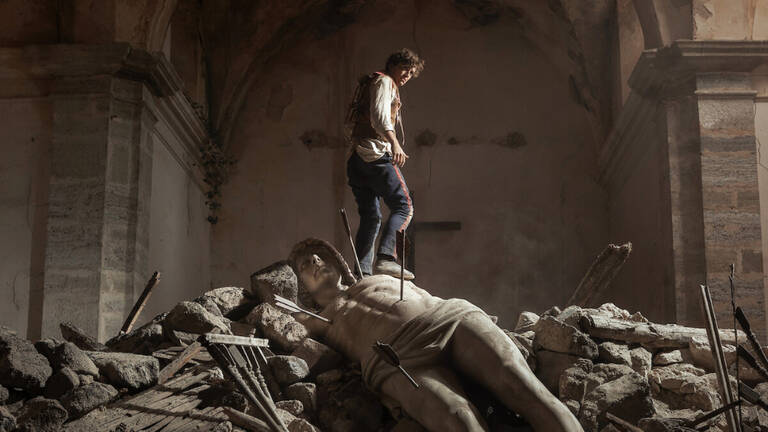
The film opens with a very powerful sequence in a small village in 1939, where the locals are celebrating the imminent arrival of Mussolini’s fascist forces in an almost innocent way. The somewhat naïve Sebastián (musician Guitarricadelafuente) is a player in the town band and is more interested in music than politics. The rustic celebrations are rudely interrupted however when the Italian air force mistakenly bombs the village. Sebastián flees for his life and is then effectively pressganged into the fascist army.
Back in 1932 we meet Carlos (Milo Quifes), a young man from a good family in Granada, who is bullied by his father to join the local posh Casino club. Its members though have realized that Carlos is gay and they literally blackball him in a strange voting ritual involving black and white balls rolled down a shoot. Hence the film’s title, a euphemism for being gay.
In 2017, Alberto (Carlos González), living in a changed world where homosexuality is no longer a big deal, is doing research into gay themes in the popular music of the 1920s. Alberto then receives news of a strange bequest he is due from the will of his late grandfather – a bequest which ultimately links the stories of the three men.
It can at times be a bit tricky to keep track of the different plot strands. You have to stay alert but the shock of that opening sequence is very powerful and draws you in. In many ways the most engaging story is that of Guitarricadelafuente as Sebastian, who has an uncanny likeness to British actor Stephen Mangan. As part of his duties in the fascist army Sebastián is instructed to guard a wounded Republican prisoner Rafael (Miguel Bernardeau), an actor and star footballer. And the two fall in love. And it is in a beautifully filmed black and white sequence in flashback of a conversation between the impossibly handsome Rafael and Lorca, played by Alberto Cortés, that the three strands come together.
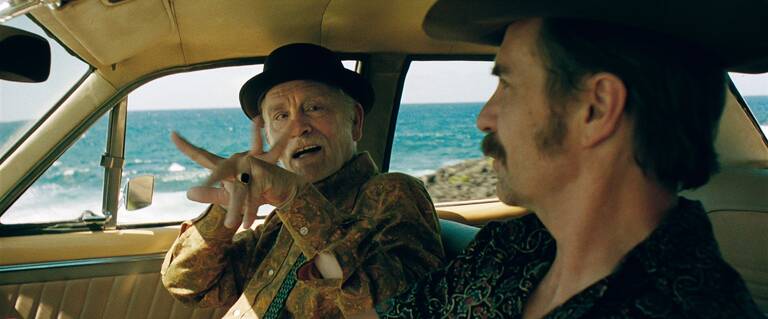
It is all beautifully performed and although a film primarily about men, there are three interesting female supporting performances. In the present century Lola Dueñas plays Alberto’s heavy drinking mother, who wants nothing to do with the mysterious bequest, while in the present we meet an academic (Gleen Close), who is an authority on Lorca and there’s a powerful cameo from an unrecognizable Penelope Cruz as a sexy nightclub singer in wartime Fascist Madrid.




About the Author