Cast: Andrew Scott, Brendan Fraser, Kerry Condon, Damien Lewis, Chris Messina Review by Carol Allen
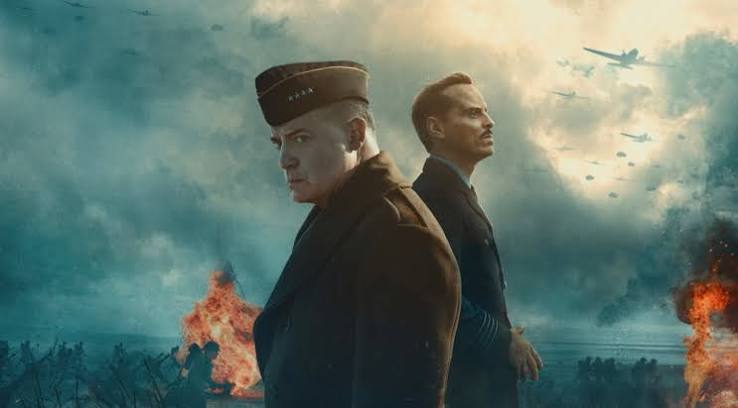
The central character is Britain’s leading meteorologist James Stagg (Scott), brought in by Eisenhower (Brendan Fraser) to advise on the all important timing of the operation. After the disaster of the D-Day rehearsal, a small and not very clear taste of which we get at the beginning of the film, Eisenhower is dead nervous, knowing that the timing is crucial – but only if the weather is right.
Stagg is an unusual role for Scott, in that the meteorologist is a brusque and somewhat uptight Scotsman, devoted to his job and not one to abide fools gladly. He is also under personal strain, as we see at the beginning, when he has to say goodbye to his very pregnant wife and go to the top secret location where he will be out of touch. Also on hand doling out some common sense is Eisenhower’s loyal secretary Kay Summersby (Keery Condon) and the British Forces commander Field Marshal Mongomery (Damien Lewis), frustrated at not being in charge at this stage of the whole operation.
The film is based on a stage play by writer/actor David Haig and it rather betrays its theatrical origins in that it is very dialogue heavy. It’s also somewhat lacking in dramatic tension, as the operations room frets for a very long time about should they go for broke with the invasion weather wise on June 5th, when we all know D-Day was the 6th June. There was a film of that title years ago!
That indecision does however eventually produce a bit of strong drama when American meteorologist Irving Krick (Chris Messina), anxious to please Eisenhower, takes an overoptimistic and less informed view that June 5th is they day to go, based just on meterological history and is slammed down by the normally restrained Stagg, who is of course correct. And there is a moment of purely visual drama, as Stagg, who has foretold good weather for the day, watches dawn breaking on June 6th to a still continuing downpour, only for the clouds to disperse and sun appear. A visually and dramatically poetic moment.




About the Author