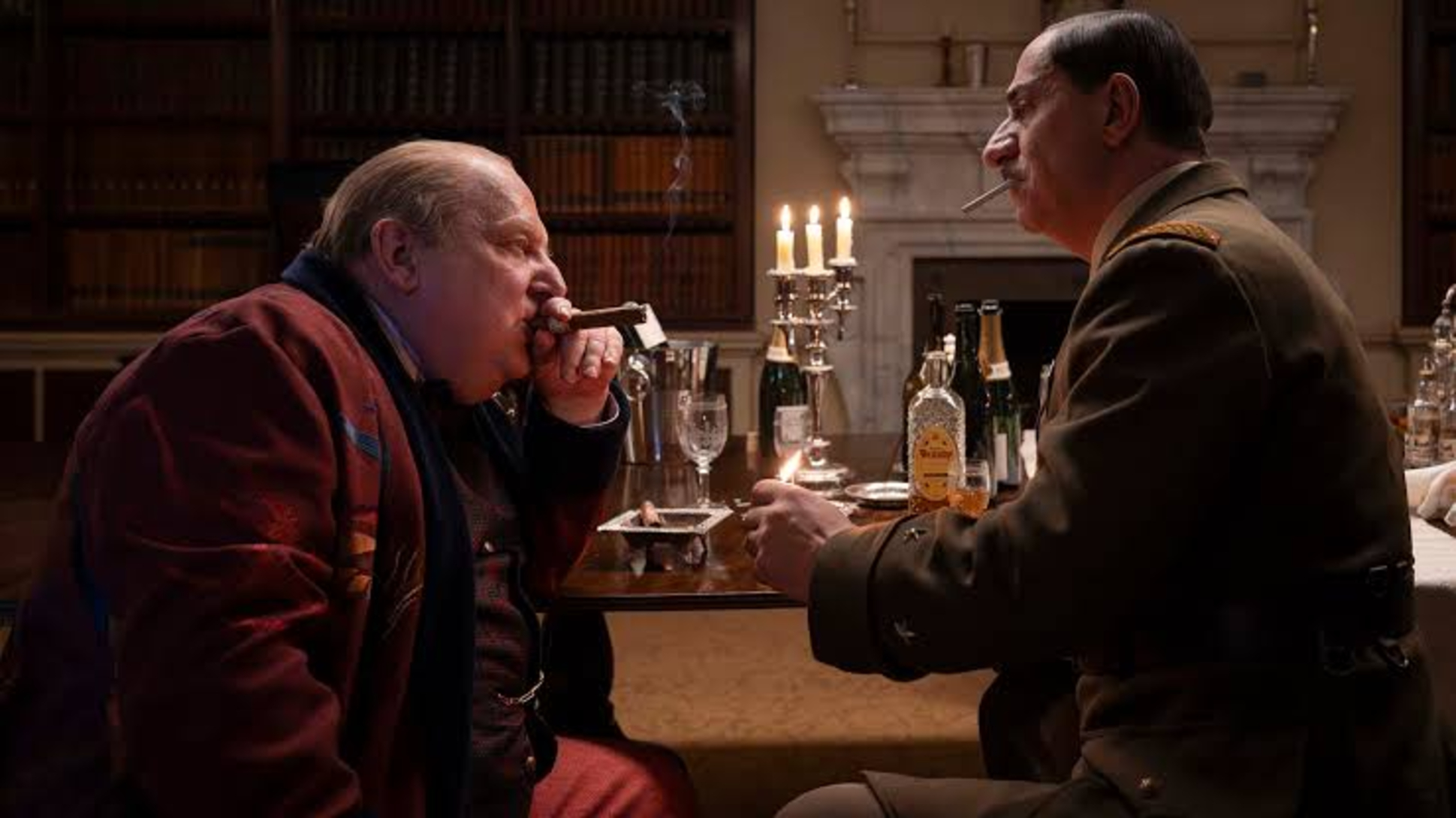
Cast: Simon Abkarian, Simon Russell Beale Review by Carol Allen
Simon Abkarian is convincing in appearance as the tall figure with a large nose resembling a stern eagle, whom I remember from caricatures when he was French president in the seventies constantly saying “non” to British efforts to join what was then the Common Market. He gets the charisma and the stubborn determination of the character too. Simon Russell Beale as a somewhat gnomic Winston Churchill, sometimes supporting this eccentric character, sometime opposing his obduracy, is a bit of a delight, particularly with his heavily accented Franglais. It’s a complex friendship, both confrontational and supportive.
In my ignorance I grew up with the idea that being leader of the Free French meant supporting the resistance movement inside France itself. De Gaulle did but that is only touched on in this episode in the form of student Fernand Bonnier de la Chapelle (Florian Lesieur) and his Jewish girlfriend Livia (Anamaria Vartolomei). It’s only towards the end of the film that Charles sends Jean Moulin (Félix Kysyl) into France to organise the on the ground resistance more effectively. So perhaps we’ll see more of that in the second film, due for release next month.
What Resistance concentrates on is the still operating areas of the French army in the country’s colonies at that time, particularly in Africa – something we didn’t hear so much about when I studied history at school. Given staff and a house by the Brits and permission to broadcast from the BBC, Charles and his small team rally the colonial army in north and central Africa.
The battle scenes in Africa are well staged, particularly the climactic conflict in the desert of Bir Hakeim under Gen Marie-Pierre Kœnig (Benoît Magimel) where the French troops hold out against Rommel in order to enable the British forces to retreat and regroup.
Another little addition to my education here was how the French view US President Roosevelt, regarded in English history as an ally. Portrayed by Campbell Scott he is shown as indifferent to De Gaulle and French interests to the point of hostility. Thus demonstrating once more that history depends very much on who is telling the story.




About the Author