LOLLIPOP writer/director Daisy-May Hudson and lead actresses Posy Sterling (BIFA Breakthrough award winner and yesterday announced as a BAFTA Rising Star nominee) and Idil Ahmed were in the heart of Parliament, where the film and its themes were used as the basis of a timely, heartfelt and passionate panel discussion.
Hosted by Jess Asato MP in the Attlee Suite at Portcullis House, and The Birth Companions Institute, the event brought together parliamentarians, policymakers, practitioners, those with lived-experience, charity leaders, social workers and those working within the housing and prison systems to explore urgent issues facing mothers and children caught in complex and often hostile systems, and discuss opportunities for policy change.
Clips from LOLLIPOP were used during the panel to kick-off conversations around key areas of policy. It was referred to several times throughout the event as a genuinely eye-opening film which holds up a mirror to our systems without taking sides, or a swing at those working within them.
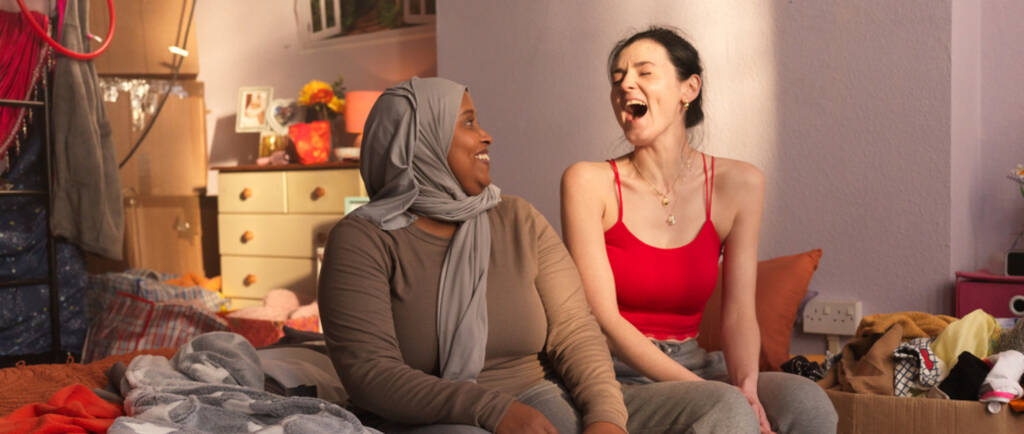
The BBC FILM and BFI backed LOLLIPOP tells the story of a young mum, Molly, who is released from prison after serving four months, and assumes it will be a matter of hours before she can pick up her children from foster care. Instead, Molly finds herself in the mother of all catch-22s: she can’t get housing because she doesn’t have her kids living with her; but she can’t get them back without a roof over her head.
The film will debut on BBC iPlayer this Friday, January 16th as well as airing on BBC Two at 11pm.
Additional panel members included Kirsty Kitchen (Director of The Birth Companions Institute), Sherma Polidore (Family Law Solicitor and supporting role in Lollipop), Emilia Rose Porter (Lived Experience Script Consultant on Lollipop), Kate Saunders (Service Manager at National Youth Advocacy Service – NYAS), Molly Ellis (Founder of Project Accountability) and Mandy Ogunmokun (CEO of Treasures Foundation and supporting role in Lollipop).
The panel aligned on the following six takeaways as key areas most in need of change:
- Reforming housing policy and practice
- Ending the imprisonment of pregnant women and mothers of dependent children
- Prioritising services that address the root causes of offending
- Creating more compassionate, coordinated and consistent support for women and infants who have involvement from children’s social care
- Prioritising mental health support for mothers at risk of separation, or separated from their children
- Improving support for girls and young women in or leaving local authority care
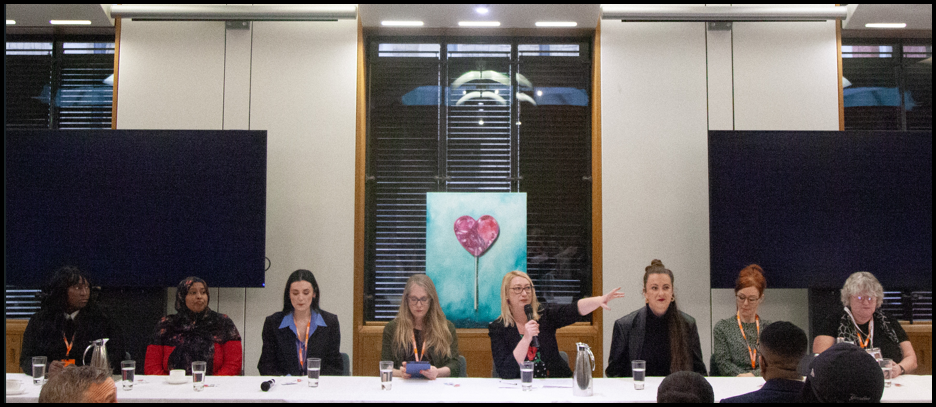
The LOLLIPOP parliamentary panel in progress
Alongside the Parliamentary panel, renowned artist Sophie Tea created a unique painting in support of the real-life stories behind LOLLIPOP. A testament and honouring of the real life Molly’s. The painting was taken into Parliament to sit behind the panel discussion, and on each seat was a lollipop with a small print of the painting and a QR code where women can find support services, watch the film, share their stories and enter a free raffle to win this incredible and historic piece of art. Sophie has exhibited internationally and is currently preparing for her debut at the Royal Albert Hall.
SUPPORTING QUOTES:
Jess Asato MP: “Seeing Molly and her children so powerfully portrayed in “Lollipop” really resonated with me and I immediately saw the parallels between their catch-22 situation and ones I hear about up and down the country on a daily basis. The film is a valuable tool for politicians and people who have power to effect change to see the direct impact current policy is having on mothers and families”
Kirsty Kitchen, Director of The Birth Companions Institute: “Lollipop can and will help us open eyes and hearts to the way our systems – criminal justice, housing, social care, and more – too often perpetuate and exacerbate cycles of harm, rather than supporting better futures. This incredible piece of storytelling can act as a real tool for change in key policy areas, and help us make sure we’re telling very different stories in the future.”
Daisy-May Hudson, writer/director of LOLLIPOP: “When women come together, magical things happen. Yesterday was testament to that when a panel entirely of women, some who have been working in housing within the criminal justice or social care sector for years, some with embodied wisdom from lived experience, all came to speak about how we make genuine change using the film as a tool to see clearly the way the systems designed to keep people safe perpetuate cycles of harm.
I realised we have all the answers-collectively and our role as storytellers is to show the truth and that is what LOLLIPOP does with love and without blame, allowing a genuine conversation transcending party politics by saying this is the system and it clearly does not work. The fact that this parliament event is happening in the same week as the television release, I really hope for the one hour thirty minutes that people get to step into the shoes of Molly, there is a consciousness shift. Conversations have too long been dominated by moral judgements of “are you a good or bad person, are you a good or bad mum?”.
This fails to recognise that prisons are where we lock up some of the most traumatised people in our society. This isn’t a question of morality, it is a question of survival. Yet the very systems that are meant to look after people, keep families together safely and rehabilitate, perpetuate generational cycles of harm. We have a long history in the UK of mothers having their children removed, usually from low income families – whether that’s single mother workhouses, Magdalene laundries or now children being removed based on “at risk of future emotional harm”.
Our focus has been on separation rather than reunification and we know that has a catastrophic impact generationally. When children go into care their outcomes in life are poorer, with almost half of the prison system made up of children who come from the care system.
So when are we going to break this cycle? When do we decide that our legacy can be so much more as a society? One that is trauma informed, that is compassionate, that gives people enough safety and support to come out of survival mode and start being able to make choices over their life. I hope Lollipop can hold the hope for many either going through it right now, or hold a vision for society of what is possible when we look at what values we want our systems and society to be governed by”.
Posy Sterling, lead actress in LOLLIPOP, BIFA Breakthrough Award Winner and BAFTA Rising Star Nominee: “For me, playing Molly in LOLLIPOP, and my work over the years alongside organisations such as Clean Break, has meant grounding myself in rigorous research and in the lived experiences of women and practitioners — and paying close attention to the quiet, devastating gaps between what our systems promise and what they deliver. Molly’s story isn’t about blame; it’s about visibility, compassion, care and urgency. If we can see how easily love, safety and stability are undermined by poverty, housing insecurity and lack of support, then we have a responsibility to ask how we can do better — and to keep families together, safely.“
Sophie Tea, renowned artist and campaign collaborator: “I got involved because LOLLIPOP tells real women’s stories. Seventeen thousand children are separated from their mothers due to maternal imprisonment every year – that number stayed with me. This painting is my way of supporting that conversation.”




About the Author